

Everything you need for DPT-3 Filing
DPT-3 Filing is a mandatory annual compliance under the Companies Act, 2013, where companies report details of outstanding loans, deposits, or amounts not considered as deposits to the Registrar of Companies (ROC), ensuring transparency and regulatory compliance in India.
Benefits of DPT-3 Filing
- Ensures compliance with the Companies Act, 2013,
- Discloses outstanding loans and non-deposit amounts transparently,
- Avoids heavy penalties and ROC notices,
- Keeps company records updated with MCA,
- Mandatory annual compliance for eligible companies,
- Improves corporate governance and credibility
Eligibility Criteria for DPT-3 Filing
- All companies (except Government companies, where exempted),
- Companies having outstanding loans, advances, or amounts not treated as deposits,
- Applicable even if no deposits are accepted,
- Mandatory annual filing as per MCA notification
Process of DPT-3 Filing in India
- Data Review – Identify outstanding loans and non-deposit amounts,
- Auditor Verification – Obtain auditor’s certification,
- Form Preparation – Prepare DPT-3 with accurate details,
- ROC Filing – Submit form on MCA portal,
- DSC Verification – Digital signature by authorized director,
- Acknowledgement – ROC confirmation received
Get prepared
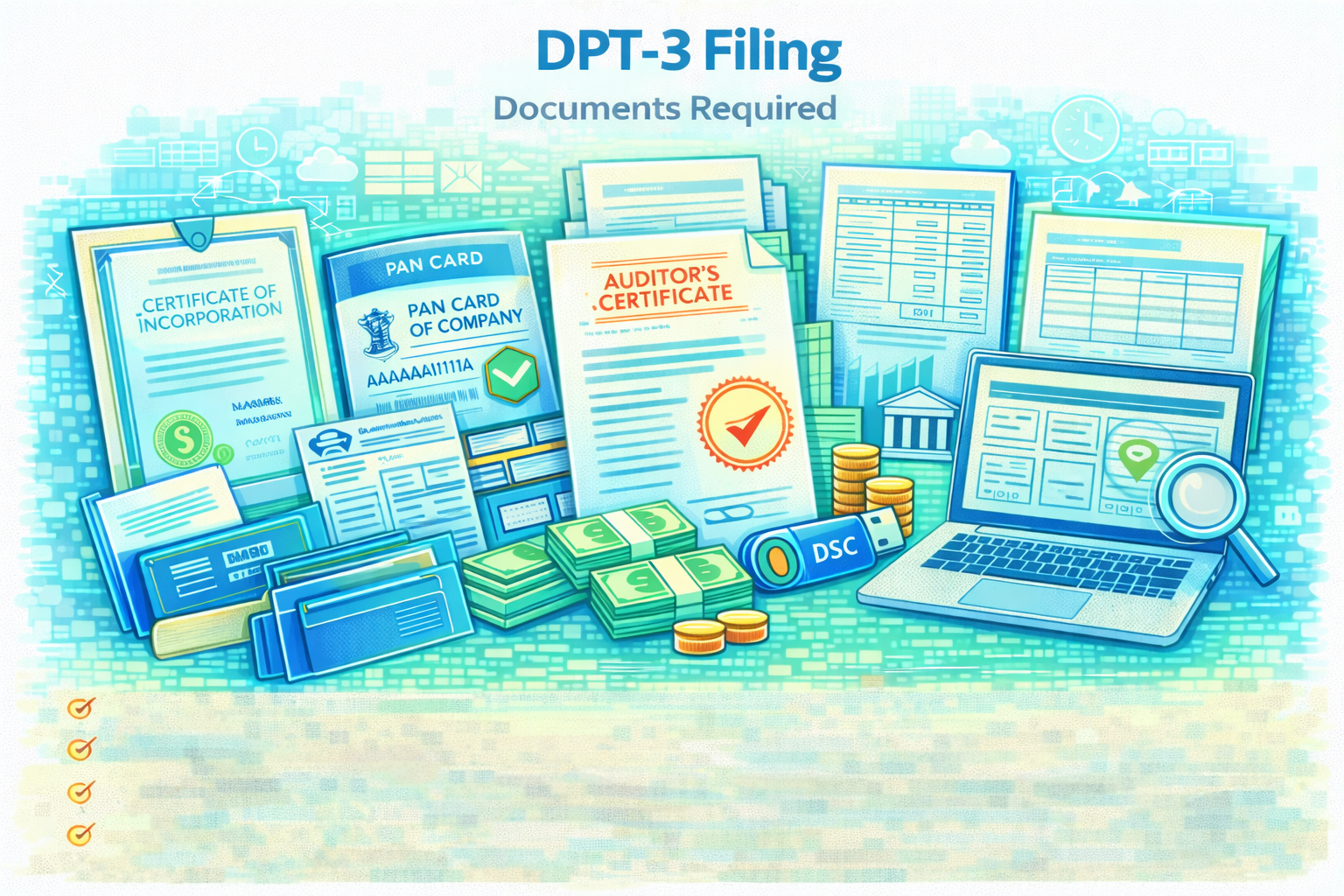
Documents & information required
- Certificate of Incorporation
- PAN Card of company
- Audited financial statements
- Details of outstanding loans or deposits
- Break-up of amounts not considered as deposits
- Auditor’s certificate
- Bank statements
- Board resolution (if applicable)
- Digital Signature Certificate (DSC) of authorized director
- Previous DPT-3 filing details